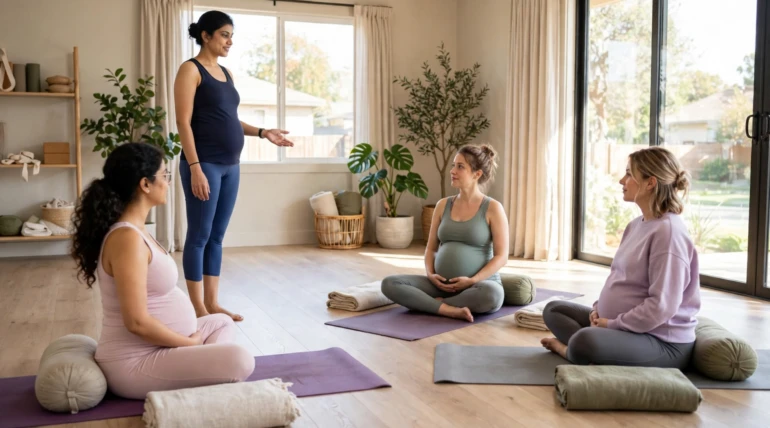
Running asks the same few muscles to do the same few things, thousands of times, in a straight line. So do most sports, in their own patterns. That repetition is exactly what makes you good at your sport — and exactly why hips tighten, hamstrings shorten, ankles stiffen and one side of the body quietly starts doing more work than the other. Yoga for runners and athletes is not a replacement for your training. It is the session in the week that works in the opposite direction: opening what training closes, steadying what training loads, and slowing down what training speeds up.
New to the studio? Our complete beginner’s guide to yoga classes in Duluth covers your first class. This article is for people who already train — and want to keep training for years.
The honest headline, first
Yoga can support mobility, balance, body awareness and recovery habits. It cannot guarantee you will stay injury-free, it cannot promise a faster race time, and it is not physiotherapy. If something hurts in a way that changes how you move, that is a conversation for a doctor or physio first — and we will tell you so in class, too. What follows is what yoga genuinely contributes to a training life, stated plainly.
Where training tightens you — and what we do about it
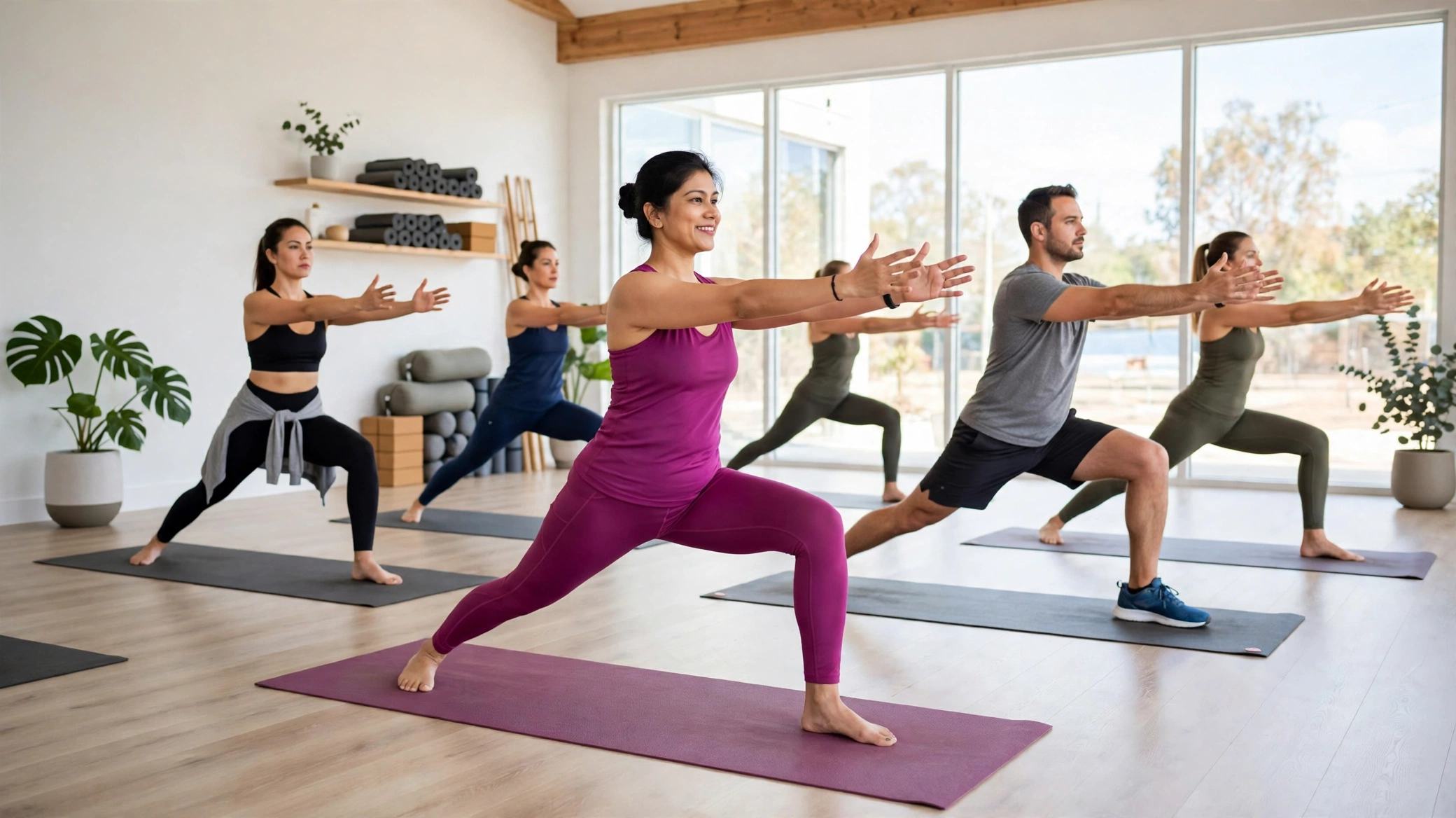
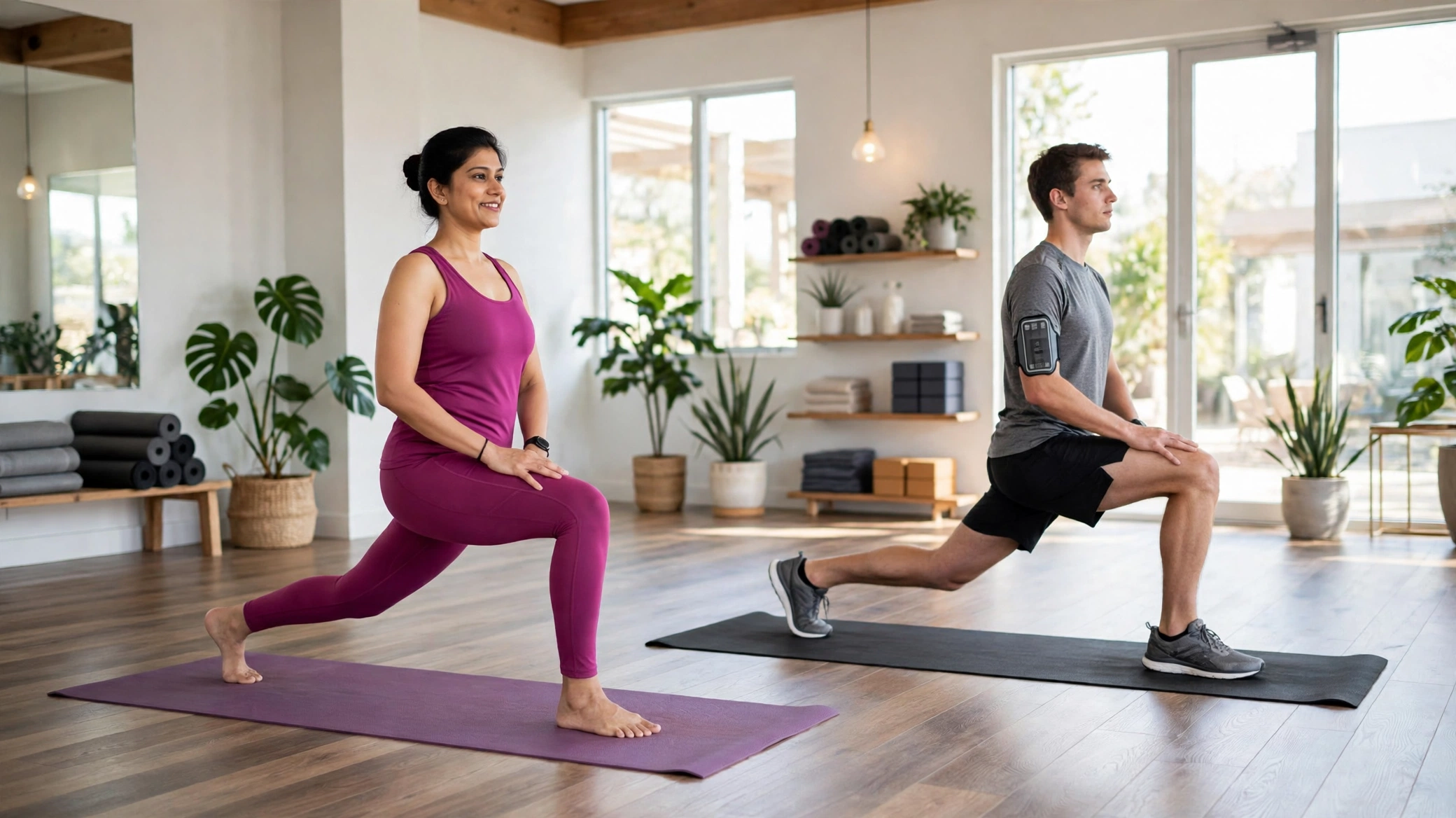
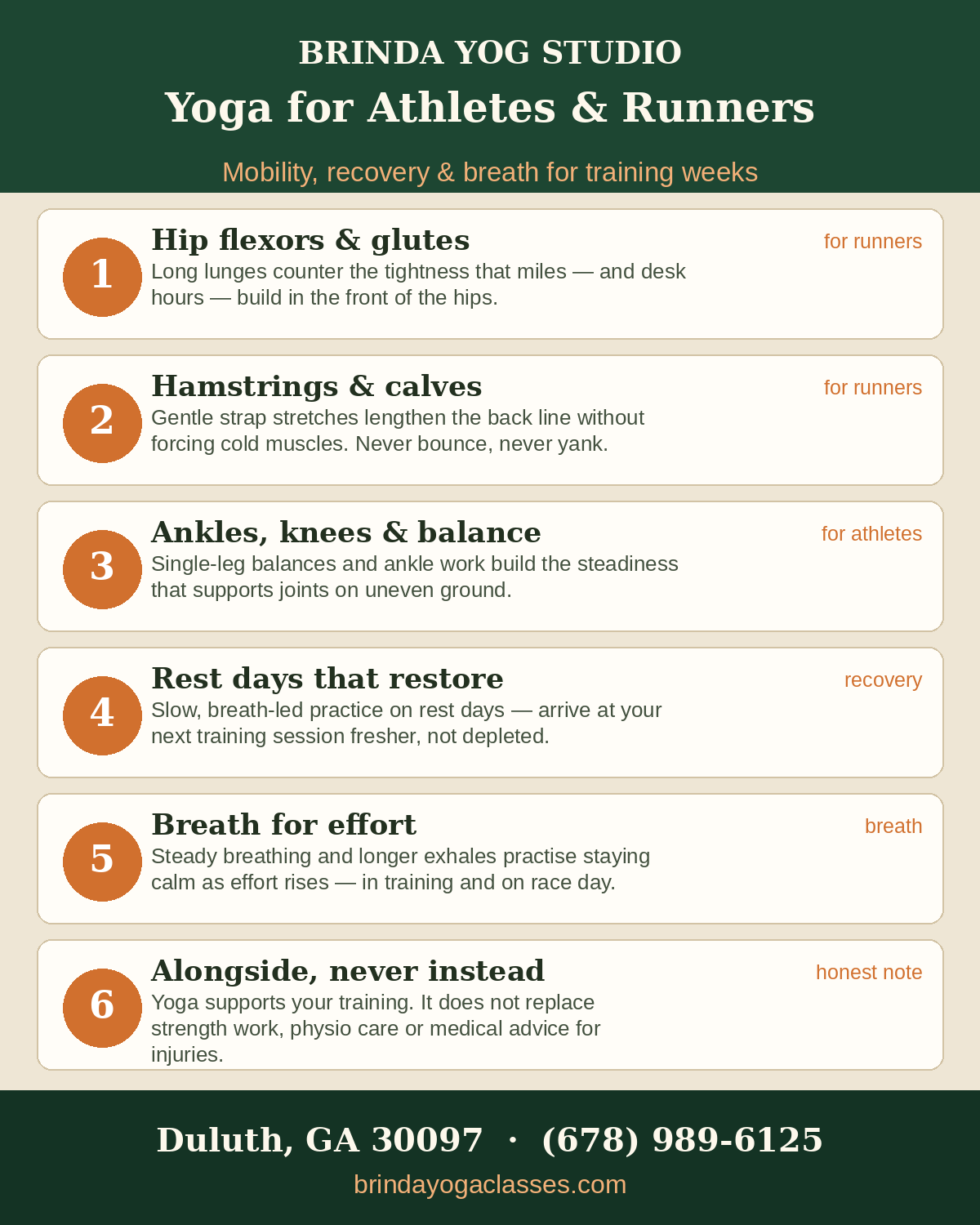
Hip flexors and glutes. Miles — and the desk hours most of us stack on top of them — shorten the front of the hips. Long, unhurried lunges and glute work are the counterweight, and they are the first thing most runners tell us feels different.
Hamstrings and calves. The back line does the pushing in running, and it rarely gets lengthened with any patience. In class we use straps and blocks so the stretch is gradual and measurable — never bounced, never yanked. Cold muscles before a run get dynamic movement, not deep stretching; the long holds belong after training or on their own day.
Ankles, knees and balance. Single-leg balances and deliberate ankle work build the steadiness that supports joints on trails, courts and uneven pavements around Duluth and Johns Creek. Balance is also information: the side that wobbles is telling you something your training log will not.
Core and breath. A runner’s core is not about appearance — it is what keeps form together in the last mile. Our power yoga sessions carry the strongest core work at the studio. And breath is trainable: steady breathing under effort, and longer exhales to settle afterwards, are skills our breathwork & pranayama teaching builds directly.
Training hard and feeling tight everywhere? Tell us your sport and your schedule — we will place you in the right class for your training week. Call (678) 989-6125 or see classes & book your spot
What yoga does not do — the list nobody puts in the ad
It does not replace strength training; runners still need progressive load, and a yoga class is not that. It does not diagnose or treat injuries — persistent pain, numbness, or pain that changes your gait belongs with a medical professional, and our yoga therapy work only ever sits alongside that care. It does not stretch you “loose” in a week; mobility changes the way fitness changes, slowly and with repetition. And more flexibility is not automatically better — athletes need usable range with control, not party-trick range. We teach toward the usable kind.
🎥 Watch: back-bending mobility work with a yoga wheel, with Vaishali
Notice the support under every movement: the wheel carries part of the load so the stretch stays controlled and the breath stays steady. That is the difference between mobility work and forcing — and it is how we want athletes to treat every tight area, hip to heel.
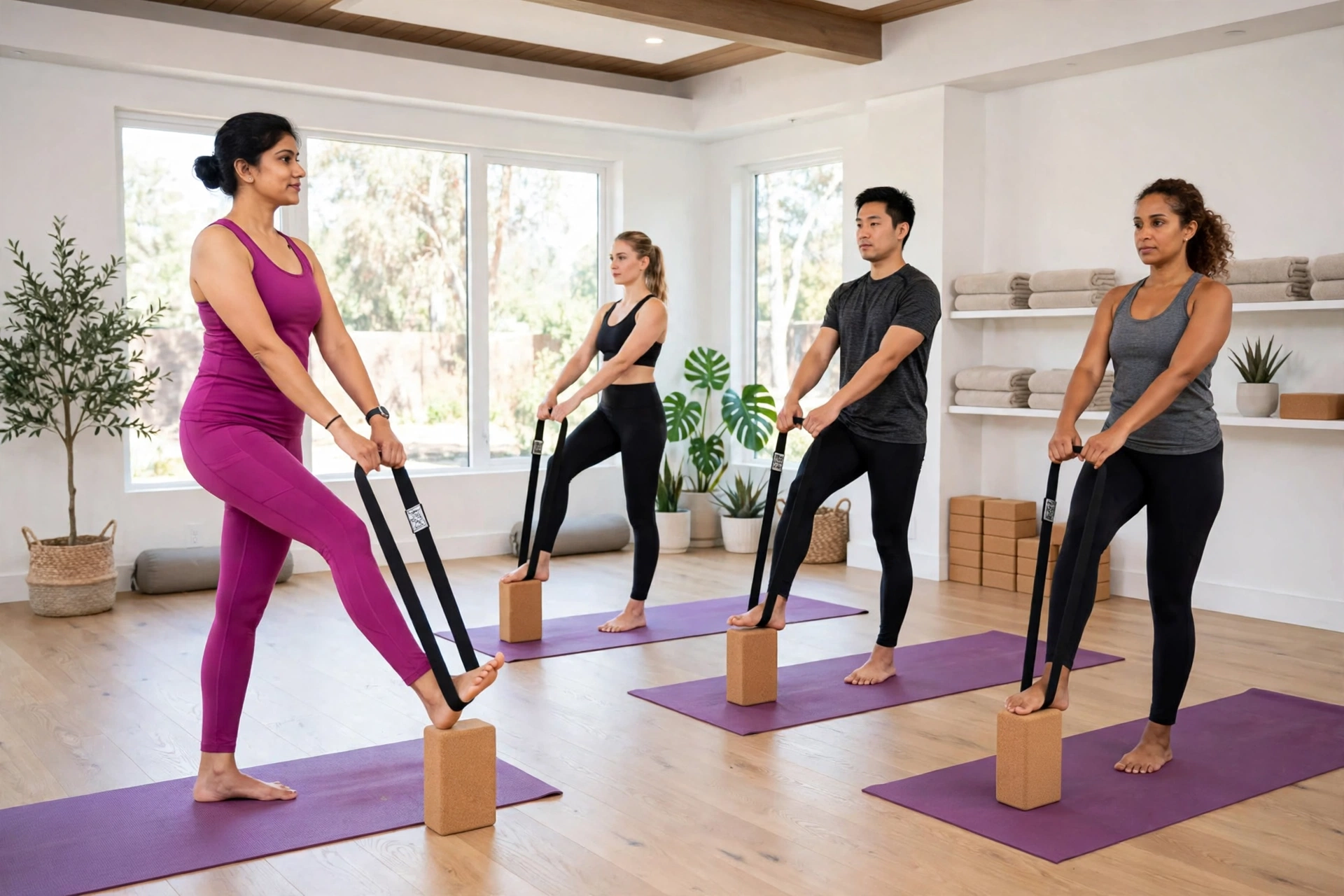
A training week that includes yoga
One mobility-focused class. The hip, hamstring, calf and ankle session — ideally not crammed immediately before your hardest workout.
One stronger session, optional. Power yoga doubles as controlled strength and core work; many athletes use it as their cross-training day. Do not stack it the day before a long run and then blame the yoga.
Ten minutes on rest days. A short, breath-led sequence at home — lunges, a strap stretch, a balance, a minute of longer exhales. Rest days are where the week’s work settles; gentle movement serves them better than the sofa alone. Our guide to yoga classes in Johns Creek shows how local students fit classes around busy weeks.
Race week: less, not more. No new deep stretches, no heroic sessions. Short, familiar, calming practice only — your body should meet race day rested, not newly opened in ways it has not adapted to.
What students say about training at Brinda
Two students, in their own words, taken word for word from the studio’s testimonials page. These are individual experiences — not promises about what practice will do for your sport:
“I have very gud experience in the class excellent yoga mam with us who works very hard for us as well as she gives us homly n friendly environment aftr join the class i am feeling much energy n fitness also Overall fit”
— Prasoon Sharma, student
“Great instructor with fantastic ambiance Healthy and fit , looking young then my age.”
— Jhanvi Tolani, student
Read more on our student testimonials page.
Frequently asked questions
Start with one mobility-focused class a week, placed away from your hardest session, plus ten gentle minutes on a rest day. That is enough to feel the difference in your hips and back line. Add a stronger session later only if your training load genuinely has room for it.
No — deep, long-held stretching belongs after training or in its own session. Before a run, keep movement dynamic and familiar: leg swings, walking lunges, easy mobility. In class we will show you both kinds and when each belongs.
No honest teacher can promise that. Yoga can support mobility, balance and body awareness, and it can help you notice tightness and one-sidedness earlier — but injuries have many causes, and prevention claims would be a promise we cannot keep. Pain that persists or changes how you run needs a doctor or physio.
That is the normal starting point for athletes, not a disqualification. Straps, blocks and the wheel exist precisely so every stretch can meet a tight body where it is. You will never be asked to force a position.
Tell us about it before class, and keep your doctor’s or physio’s guidance in charge. Vaishali — a certified yoga therapist — can shape your practice around their advice, with variations and props. Yoga here is supportive care alongside your treatment, never a replacement for it.
Classes are by prior appointment only, between 9 AM and 6 PM, at our Duluth studio — minutes from Johns Creek, Suwanee and the Sugarloaf area. Call (678) 989-6125, tell us your sport and training schedule, and we will suggest the right first class.
Train hard, recover honestly
Your sport gives you strength, rhythm and miles. Yoga gives the same body its counterweight — open hips, a patient back line, steady ankles, and breath you can find when the effort rises. Put one session a week on the side of recovery, and let the two practices make each other sustainable.
📍 Brinda Yog Studio · Duluth, GA 30097
📞 Call (678) 989-6125 · 🗓️ See classes & book your spot · ✉️ Ask us a question
📷 Follow our daily practice on Instagram: @brindayogstudio · ▶️ Watch us on YouTube